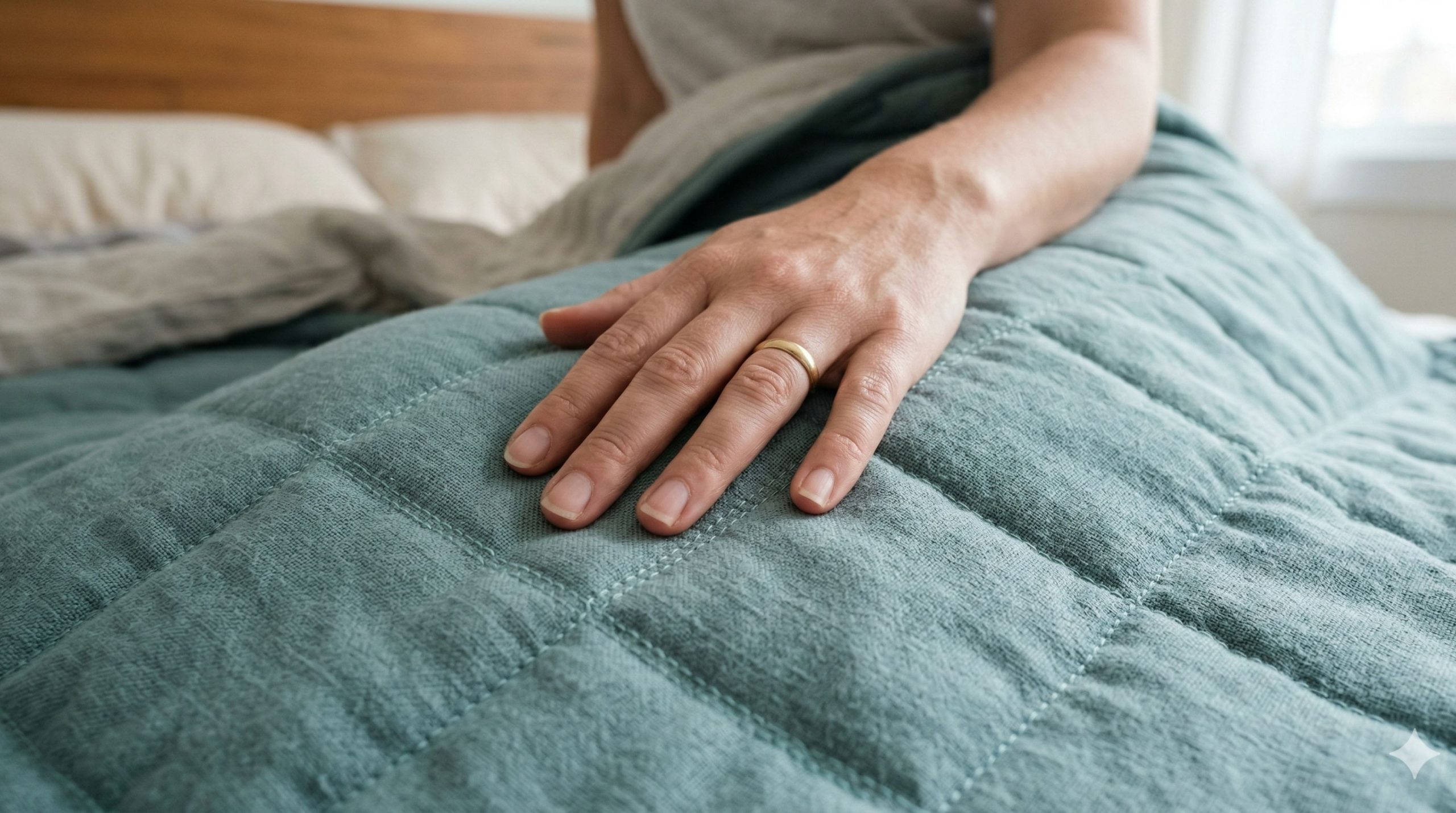
The Sensory Baseline Weighted Blanket Audit
Weighted blankets are one of the most widely recommended sensory tools for autistic and ADHD people. They are also one of the most inconsistently studied. This is an honest audit, not a sales pitch — what the evidence actually supports, where it is weaker than the popularity suggests, and how to choose one if you decide it is worth trying.
The short version: the mechanism is real and well-understood. The evidence for who specifically benefits is more mixed than most articles admit.
The Mechanism Is Real
Firm, distributed pressure across the body is processed differently to light or unpredictable touch. It engages , which reliably shifts the nervous system toward a parasympathetic, calmer state — the same rest-and-digest system covered in our vagus nerve guide. This part is genuinely well-established, not disputed.
What is less settled is how reliably this translates into measurably better sleep for any specific group, and that distinction matters more than most product pages let on.
Distributed weight → deep pressure receptors activated → parasympathetic shift → reduced heart rate, lower cortisol, a felt sense of containment. This is the same nervous system switch behind most calming techniques on this site — a weighted blanket is simply a passive, continuous way of engaging it.
Popular understanding and the actual evidence base do not fully agree here, and that gap is worth knowing about honestly.
Evidence here is genuinely more promising than for autism specifically. Studies including ADHD participants show improvements in falling asleep, staying asleep, and daytime relaxation — a pattern consistent enough across several studies to take seriously.
AuDHD sits between the two evidence pictures — the ADHD-linked benefit may apply, and the deep pressure mechanism engages the same nervous system regardless of diagnosis. Individual sensory response, not diagnostic label, is the more useful thing to track for yourself.
This is the surprising part: despite being the group most associated with weighted blankets in popular understanding, a narrative review found evidence specifically for autism is limited, and one study found parents preferred them despite no significant increase in measured total sleep time. This does not mean they do not help — it means the evidence is weaker than the reputation suggests.
Choosing and Using One
- Start at 10 percent of body weight — the most consistently cited figure across sources, though some sources suggest up to 15–20 percent for children specifically. Start lighter and increase if needed, not the reverse.
- Choose a fill you can distribute evenly — glass beads or plastic pellets settle less than other fills over time.
- For children, the blanket must be light enough that they can remove it independently — this is a genuine safety requirement, not a preference.
Never for infants — weighted sleep products are explicitly warned against for babies due to suffocation and chest-restriction risk. Use caution or avoid entirely with sleep apnea, asthma, or claustrophobia, and consult a doctor first if any of these apply. If a blanket ever feels restrictive or distressing rather than calming, that is a genuine signal to stop, not something to push through.
Two Real Options, Two Different Fill Approaches
| Blanket | Fill approach | Best for | Approx. price |
|---|---|---|---|
| Bearaby Cotton Napper | 100% organic cotton, hand-knit — all weight from fabric itself, zero beads or pellets | No settling or redistribution risk at all | ~$250–300 |
| Saatva Organic Weighted Blanket | Organic cotton velvet, diamond-quilted, all-natural glass bead fill | Traditional weighted-blanket feel, quilting keeps beads evenly distributed | ~$345 |
The Bearaby sidesteps the fill-distribution question entirely — there is nothing inside it to settle or shift, since the weight comes from the knit itself. The Saatva is the more traditional choice if you want the classic weighted-blanket feel; its diamond quilting is specifically designed to keep the glass beads from bunching, addressing the exact distribution concern raised above.
Some people find deep pressure calming within minutes. Others find the initial sensation activating rather than soothing, particularly if tactile sensitivity is part of your sensory profile. Try one during a calm daytime moment before relying on it for an important night’s sleep — the same caution that applies to other sensory tools on this site.
- 1 genuinely shifts the nervous system toward a calmer, parasympathetic state — the mechanism itself is well-established.
- 2Evidence for sleep benefit is more consistent for ADHD than for autism specifically — the opposite of what popular reputation suggests.
- 3Subjective preference and objectively measured sleep time do not always move together — people can genuinely prefer a weighted blanket without it changing how long they actually sleep.
- 410 percent of body weight is the most consistently cited safe starting point, adjusted for the individual.
- 5Never for infants. Use caution with sleep apnea, asthma, or claustrophobia. If it feels distressing rather than calming, stop — that response is information, not something to override.
Weighted blankets work through the same nervous system switch covered across this site — understanding the full mechanism explains why breathing, cold exposure, and pressure all engage the same pathway.
Read the Wind-Down Deep Dive