
Skip to content
8hrSleep advice for Neurodivergence (2)
  • Blog
  • Foundations
  • Sensory & Environment
  • Mind & Nervous System
  • Body & Biology
  • Circadian Rhythm & Life Rhythms
  • About
  • Resources
8hrSleep advice for Neurodivergence (2)
  • Neurodivergent Shift Work Sleep Tricks
    Circadian Rhythm & Life Rhythms

    The Neurodivergent Guide to Autonomic Recovery for Shift Workers

    ByLisa August 7, 2026August 17, 2026

    Evidence-basedAuDHD lived experienceCircadian physiology Shift work does not just move when you sleep. It puts your autonomic nervous system — the same system covered in our vagus nerve guide — into a state of chronic, measurable strain. Workers whose body clocks have not adapted to their shift pattern show higher sympathetic dominance during daytime sleep…


    Read More The Neurodivergent Guide to Autonomic Recovery for Shift WorkersContinue

  • Body & Biology

    Reflux and IBS in Neurodivergent People: When Your Gut Wakes You Up

    ByLisa August 6, 2026August 7, 2026

    There are thousands of guides about reflux and sleep. This is not one of them. This guide is specifically about why neurodivergent people are more susceptible to gut-related sleep disruption — and why they are also the least likely to recognise that the gut is the problem. If you wake at night with vague discomfort, a feeling of unease, or what seems like anxiety, your gut may be the cause.

    Read More Reflux and IBS in Neurodivergent People: When Your Gut Wakes You UpContinue

  • Body & Biology

    Your 2am Racing Mind Has a Physical Cause — AuDHD Night Waking Explained

    ByLisa August 6, 2026August 17, 2026

    You wake at 2am and lie there with a racing mind. You assume the problem is mental. You try breathing, thought-stopping, distraction. None of it works — because the actual problem is physical. Your body is sending a distress signal your neurodivergent nervous system cannot consciously identify. This guide covers every common physical cause of neurodivergent night waking and how to fix each one.

    Read More Your 2am Racing Mind Has a Physical Cause — AuDHD Night Waking ExplainedContinue

  • Body & Biology

    Exercise and AuDHD Sleep: Why You Stay Wired

    ByLisa August 6, 2026August 17, 2026

    Exercise is one of the best tools for AuDHD sleep. But timing it badly can keep you awake until 3am. This guide explains why your body takes so long to settle after a workout — and gives you a clear, practical plan for when to exercise instead.

    Read More Exercise and AuDHD Sleep: Why You Stay WiredContinue

  • mindfulness practice as part of bedtime routine
    Mind & Nervous System

    Thought Defusion for AuDHD Bedtime Rumination: Unhooking From the Spiral

    ByLisa August 4, 2026August 9, 2026

    Bedtime rumination in AuDHD is a nervous system event, not a discipline problem. ACT defusion techniques adapted for how AuDHD brains actually process.

    Read More Thought Defusion for AuDHD Bedtime Rumination: Unhooking From the SpiralContinue

  • Overcoming AuDHD Sleep Performance Anxiety
    Mind & Nervous System

    Overcoming AuDHD Sleep Performance Anxiety: The Psychological Guide

    ByLisa April 5, 2026August 6, 2026

    Trying hard to sleep is the exact thing keeping you awake. For AuDHD brains, the bed becomes a performance test — and failing it triggers a real adrenaline response. This guide explains the psychology of sleep effort theory and gives you four clinically grounded tools to break the loop without willpower.

    Read More Overcoming AuDHD Sleep Performance Anxiety: The Psychological GuideContinue

  • Midnight Sensory Nest for Neurodivergent Sleep (1)
    Sensory & Environment

    How to Build a Midnight Sensory Nest for AuDHD Waking Hours

    ByLisa April 5, 2026August 17, 2026

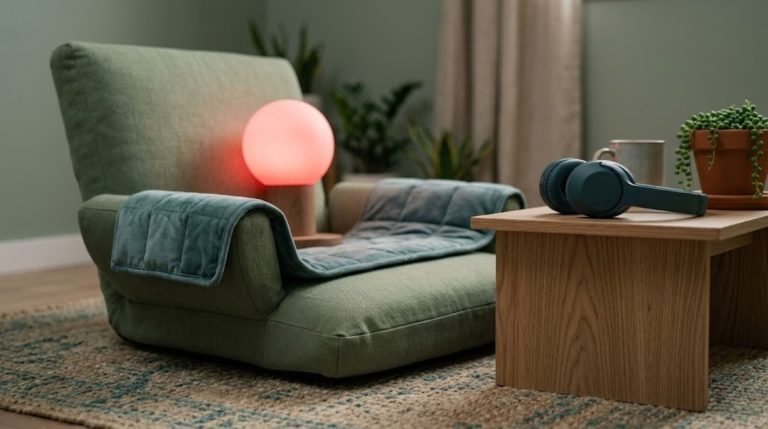
    Staying in bed when you are wide awake teaches your brain to fear it. But leaving only helps if you have a safe place to go. This guide walks you through four elements of an AuDHD midnight sensory nest — lighting, sound, pressure, and a low-demand activity — all pre-staged so you need zero brainpower to use it at 2 AM.

    Read More How to Build a Midnight Sensory Nest for AuDHD Waking HoursContinue

  • Midnight Activities for ADHD Sleep
    Mind & Nervous System

    The Best Low-Light Activities for the Midnight Watch

    ByLisa April 5, 2026August 7, 2026

    Evidence-basedAuDHD lived experienceSensory regulation The fourth element of a midnight sensory nest is a low-demand activity — something to do at 2am that asks close to nothing of your brain. This is the full list: what actually counts as low-demand, why it differs between ADHD and autism, and specific activities worth having ready. In Short…

    Read More The Best Low-Light Activities for the Midnight WatchContinue

  • Segmented Sleep for AuDHD brains is natural
    Circadian Rhythm & Life Rhythms

    Understanding Segmented Sleep for AuDHD: The Clinical Difference

    ByLisa April 5, 2026August 17, 2026

    Evidence-basedAuDHD lived experienceSleep medicine You have probably seen the claim: humans used to sleep in two segments, a ‘first sleep’ and ‘second sleep’, with an hour of quiet wakefulness in between. Waking at 2am is not a problem, the story goes — it is your ancestors’ natural pattern reasserting itself. It is a genuinely comforting…

    Read More Understanding Segmented Sleep for AuDHD: The Clinical DifferenceContinue

  • Neurodivergent Sleep Hacks (1)
    Circadian Rhythm & Life Rhythms

    How to Rebuild Sleep Trust After Years of Shift Work

    ByLisa March 30, 2026August 17, 2026

    Evidence-basedAuDHD lived experienceBehavioural sleep medicine You moved to days. Or you left the job entirely. The schedule that broke your sleep is gone — but the insomnia is not. This is not in your head, and it is not a sign you did something wrong. It is a recognised pattern: once disrupted sleep runs long…

    Read More How to Rebuild Sleep Trust After Years of Shift WorkContinue

  • Sensory Weighted Blankets for Neurodivergent Sleep
    Sensory & Environment

    The Sensory Baseline Weighted Blanket Audit

    ByLisa March 28, 2026September 1, 2026

    Weighted blankets are popular for autism and ADHD sleep. Here is an honest look at what the evidence actually supports, and how to choose one safely.

    Read More The Sensory Baseline Weighted Blanket AuditContinue

  • the 8-hour sleep myth for Audhd brains
    Foundations

    The 8-Hour Sleep Myth: Why Neurodivergent Brains Need a New Blueprint

    ByLisa March 28, 2026August 17, 2026

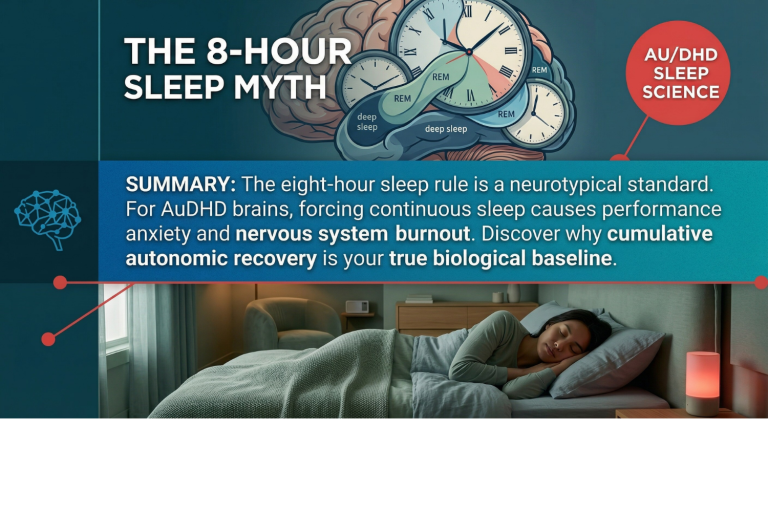
    You are not failing at sleep. The metric is wrong. The 8-hour rule was designed for neurotypical nervous systems — not AuDHD brains with delayed melatonin, disrupted sleep spindles, and sensory gating that never fully switches off. This guide replaces the wrong target with the right one.

    Read More The 8-Hour Sleep Myth: Why Neurodivergent Brains Need a New BlueprintContinue

Page navigation

1 2 3 Next PageNext

Post Categories

  • Body & Biology
  • Circadian Rhythm & Life Rhythms
  • Foundations
  • Mind & Nervous System
  • Sensory & Environment

Latest Posts

  • Amber and Red Light for Sleep: What Actually Matters
  • Compression Sheets: A Genuinely Different Alternative to Weighted Blankets
  • Cooling Mattresses: Why Motion Transfer Matters More Than You Think
  • Cooling Mattress Toppers: The Real Tradeoff Between Feel and Temperature
  • Cooling Sheets for Sensory-Sensitive Sleepers: Percale vs. Sateen
  • Why Temperature Matters More for Neurodivergent Sleep
  • Why Some AuDHD Brains Want More Noise, Not Less
  • The Science of Noise Masking: Why White Noise Actually Works
  • AuDHD and Sleep: Why the Overlap Feels Contradictory
  • Is ADHD Itself a Sleep Disorder?

Resources

Free: The Midnight Sensory Nest Kit — a printable 2am survival card.

Free: Am I Actually Okay? — a 6-question sleep self-assessment.

Free: Light Therapy Checklist — a printable one-page reference.

© 2026 Sleep Solutions for Neurodivergent Individuals - WordPress Theme by Kadence WP

Scroll to top
  • Blog
  • Foundations
  • Sensory & Environment
  • Mind & Nervous System
  • Body & Biology
  • Circadian Rhythm & Life Rhythms
  • About
  • Resources

Terms and Conditions