Therapeutic Aspects of Coloring for Sleep
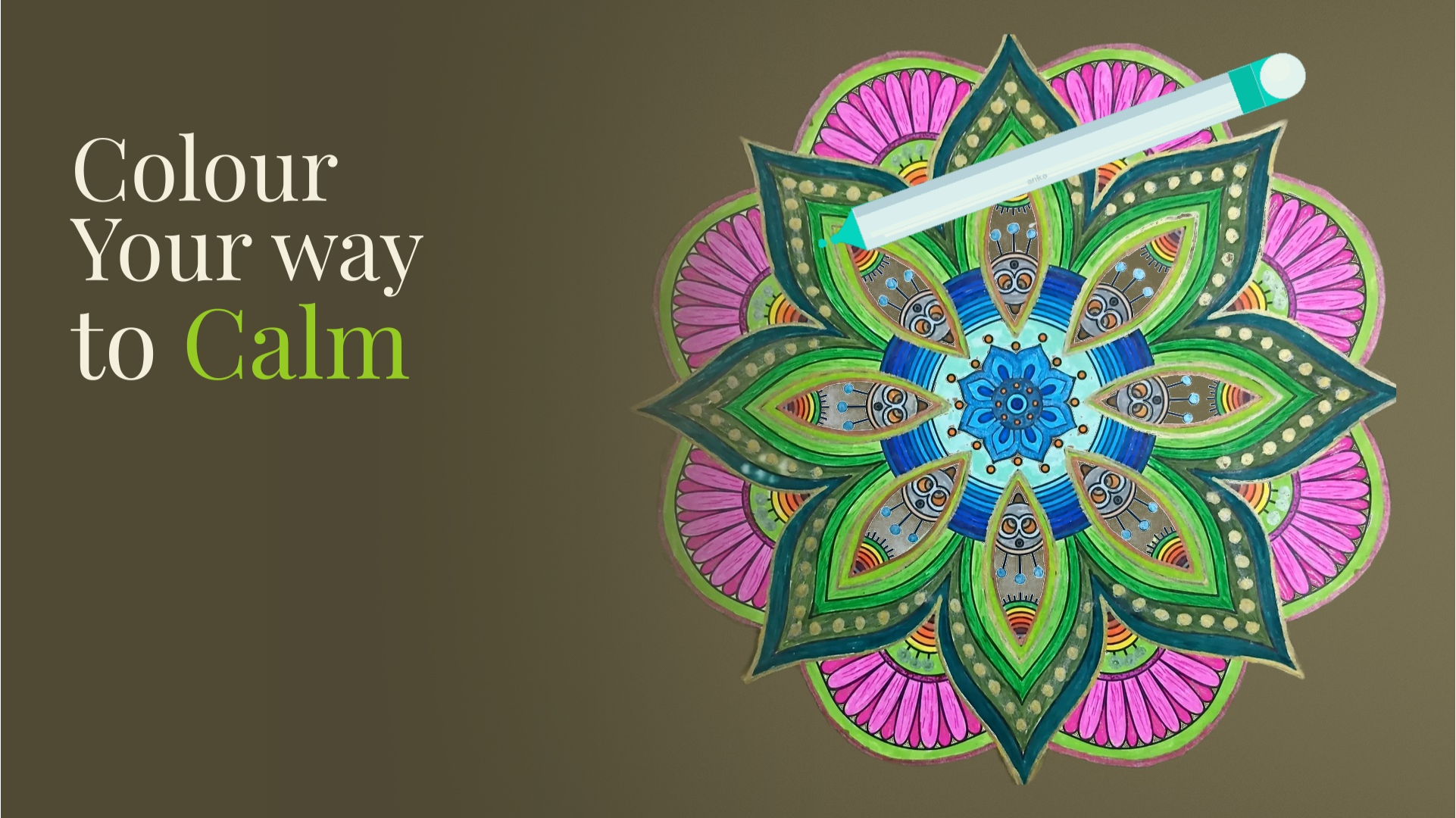
Coloring is not about making art. It is about giving a restless mind a low-stakes job to do so it can finally stand down. That framing matters more than which specific pattern you pick — and the honest research picture is more useful than the version usually repeated.
Coloring engages both the structured, line-following side of attention and the more open, aesthetic side at once — a combination well suited to inducing a : absorbed enough to quiet the internal monologue, low-stakes enough to require no real skill. Clinicians describe it as pulling modest attention outside of self-focus, the same basic effect knitting or repetitive gardening can produce.
Here is where the honest version diverges from the popular one. It is often claimed that mandala-style geometric coloring specifically outperforms other coloring for anxiety reduction. Our companion piece on symmetry and pattern covers this in full: the most recent pooled analysis of the evidence found mandala coloring does not significantly outperform free drawing. What the research does support is structured, engaging activity generally — the flow-inducing mechanism, not the specific pattern.
Pick whatever pattern you find genuinely absorbing — mandalas, simple geometric grids, or even a plain page of doodling. The mechanism does not depend on it being a mandala specifically.
The repetition itself is doing real work, not just filling time. A steady, predictable motor task gives the nervous system a clear signal: nothing urgent is happening, it is safe to stand down. This is the same principle behind why a long walk or repetitive chore can feel calming even when nothing about the day has actually changed.
For a system running on high alert — after a stressful shift, or in a home with unpredictable noise from housemates — a predictable, low-stakes activity provides something concrete to process the moment through, rather than actively ruminating on it.
Research on repetitive hand movement and fidgeting from UC Davis MIND Institute found it can improve sustained attention in ADHD, plausibly via a modest dopamine and norepinephrine increase. Worth being precise: this research studied fidgeting broadly (leg bouncing, pen clicking), not coloring specifically — coloring is a reasonable extension of the same mechanism, not a directly studied case.
Can combine both angles — the hand-occupying benefit for restlessness, plus the calming, absorbed-attention benefit for sensory regulation. Listening to calming audio while coloring often works better than either alone, since the coloring absorbs the fidget energy that would otherwise become a racing mind.
Functions as a form of — purposeful, regulating repetitive motion — while directing attention toward a calming visual focus. This gives it a genuine advantage over passive fidget tools like spinners: it occupies the hands and the eyes toward the same calming goal.
- Replace the screen, 20–30 minutes before sleep — removes blue light exposure, which directly suppresses melatonin onset.
- Use tools that feel good in hand — larger-barreled markers or a pencil grip if thin pencils are uncomfortable or irritating with sensory sensitivities.
- Add a predictable sound layer — a familiar playlist, brown noise, or an audiobook already heard before, engaging another sense without demanding new attention.
- Set an intention, not a goal — finishing the page is not the point. Ten minutes of absorbed, quiet attention is a complete win.
Used consistently as a pre-sleep cue, coloring becomes a conditioned signal your brain learns to associate with winding down — the same classical-conditioning mechanism covered in our bedtime routine guide.
- 1Coloring works by inducing a — absorbed, low-effort attention — not through any specific pattern being uniquely calming.
- 2Mandala-specific superiority over free drawing does not hold up in the most recent pooled research, despite being widely repeated as settled.
- 3Repetitive hand motion connects to real ADHD attention research, extended reasonably from fidgeting studies rather than coloring-specific trials.
- 4For autistic readers, coloring can function as purposeful — a genuine advantage over passive fidget tools.
- 5Used consistently, coloring becomes a conditioned pre-sleep cue — the process matters more than finishing anything.
Coloring is one route to parasympathetic activation. See the full autonomic mechanism it taps into.
Read the Wind-Down Deep Dive