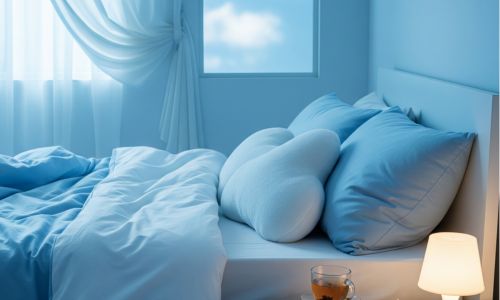
Optimize Your Sleep Environment
Three environmental factors do most of the work in a sleep-friendly bedroom: dark, quiet, and cool. Two of them get covered in depth elsewhere on this site. The third — temperature — is the one most sleep advice gets slightly wrong, and it is worth understanding properly, because the mechanism is more specific than ‘turn the thermostat down’.
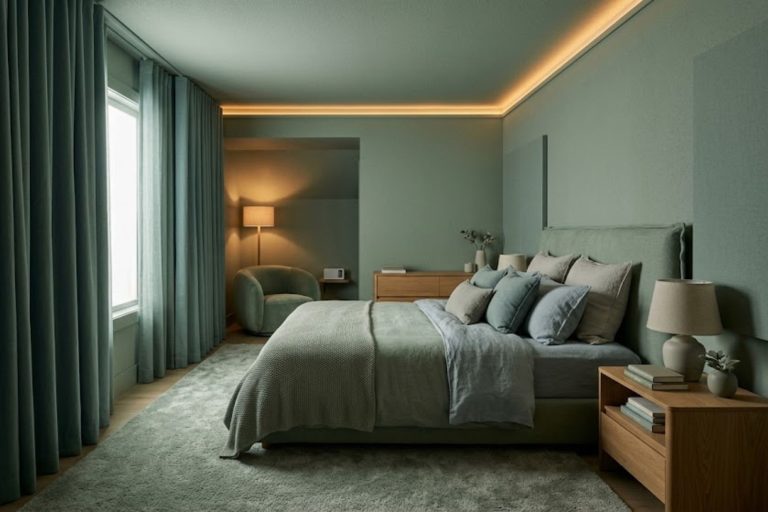
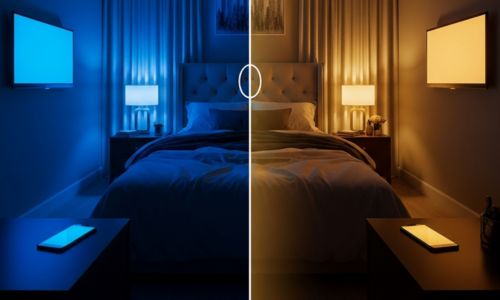
Darkness protects melatonin production and keeps your circadian signal clean — even small amounts of light, including the standby glow from electronics, can suppress it. Autistic visual sensitivity to light and contrast is a genuine, measured phenomenon, not a preference to push through, and it deserves more depth than fits here.
Our low-contrast sensory sanctuary guide covers the visual-processing research behind this in full, including the ADHD clutter angle, which runs on a genuinely different mechanism than autism’s contrast sensitivity.
Unexpected sounds are more disruptive than consistent ones, regardless of volume — a sudden noise against silence registers as a bigger event than the same sound against a steady background. Consistent white or pink noise works by reducing that contrast, not by masking everything equally.
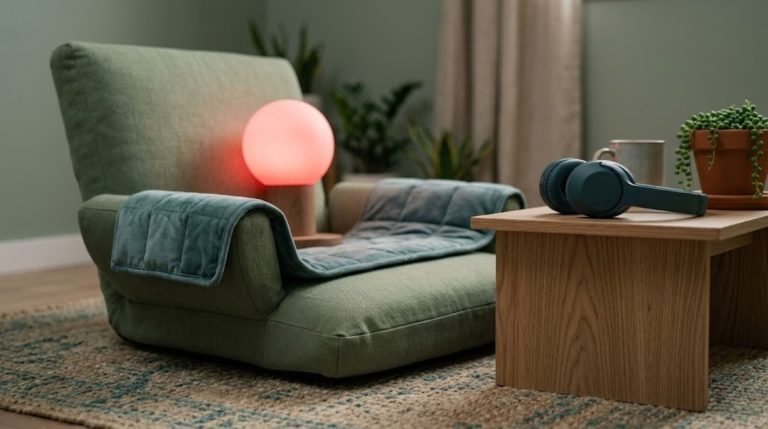
Our midnight sensory nest guide covers the sound-masking research in full, including why a consistent home track matters more than any specific sound.
The common advice is simply ‘cool room, better sleep’. The actual mechanism is more specific: sleep onset happens most readily when your is dropping at its steepest rate — not simply when it reaches some fixed low number. A room that is cold enough to slow this drop, or that pushes your body toward defensive vasoconstriction, can work against you even while feeling ‘properly cold’.
This temperature drop is not passive. Your body actively drives it through — blood vessels in your hands and feet widen, carrying core heat to the surface where it radiates away. This is why warm hands and feet often precede sleepiness, and why cutting off that radiation — cold feet, tense circulation — can leave you feeling tired but wired, unable to actually drop off.
Circadian signal triggers core cooling → peripheral vasodilation moves heat to the skin surface → heat radiates into a cool room → core temperature drops at its steepest rate → sleep onset. Block any step — a too-warm room, cold constricted extremities — and the whole chain slows down.
No strong direct evidence of altered thermoregulation specifically, though delayed circadian rhythm (covered in our exercise timing guide) means the whole temperature-drop schedule may simply run later than a fixed bedtime expects.
May combine a shifted temperature-drop schedule with genuine difficulty noticing early too-hot or too-cold signals until they become disruptive — worth checking the room proactively rather than waiting to feel uncomfortable.
An emerging, very recent theoretical model proposes an altered hypothalamic thermal set-point in autism specifically — genuinely new research, not yet well-established. Worth knowing this exists rather than treating it as settled; full detail in the exercise timing guide.
- Room temperature 15–19°C (60–67°F) — the range most consistently supported, though individual comfort varies within it.
- Keep hands and feet warm — socks, or a warm water bottle at the feet, support the vasodilation your body needs to actually dump heat.
- A warm bath or shower 60–90 minutes before bed — counterintuitively effective, since the rapid cooling after you step out amplifies your body’s natural temperature drop.
- Breathable bedding that does not trap heat against the skin — a mattress or duvet that blocks heat radiation works against the same mechanism regardless of room temperature.
- 1Sleep onset depends on the rate of decline, not simply reaching a fixed low number.
- 2 — warm hands and feet — is how your body actively radiates core heat away; blocking it can work against a cool room, not with it.
- 315–19°C (60–67°F) is the most consistently supported room-temperature range, though individual comfort varies.
- 4A warm bath before bed works precisely because it amplifies your body’s own cooling process on exit, not despite it.
- 5Darkness and quiet are covered in full elsewhere on this site — this piece exists to complete the third pillar properly.
Temperature is one piece of a larger sensory picture. See how it fits with light, sound, and pressure in one pre-staged setup.
Read the Midnight Sensory Nest Guide